
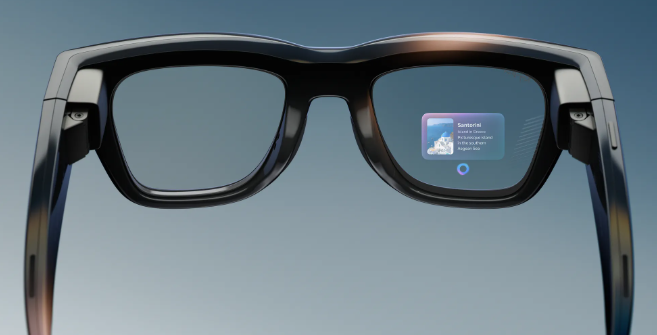
Confession time.
I’m Joana… I haven’t properly tried AI glasses yet.
But you know that feeling when…
“I haven’t even used it…
and somehow it already lives in my daily life—inside my head?”
Because when people say “AR” (augmented reality), most imagine:
maps floating in front of your eyes, objects hovering, info like holograms…
But AI glasses, I feel, goes beyond “cool floating info.”
It leans more toward:
“It understands my situation, and it helps me think and organize my world.”
So it’s not just “a display in front of my eyes,”
it’s “my life flow becomes smoother.”
Even as imagination… it’s a little scary. But even more exciting.
1) “You see it, it understands it” — this is the real core, right?
Before, the smartphone was basically: “a camera that shows what you captured.”
But AI glasses? It’s closer to a companion that understands what you’re looking at.
Scenes like:
- You’re in a café, reading the menu, and the glasses quietly goes:
“This one’s sweet, heavy sugar vibe. This one’s more acidic/fruit notes.” - You’re traveling, you look at a foreign signboard, and boom—
translation appears like subtitles, naturally. - You’re in an electronics store, staring at a spec sheet, and it says:
“Here’s how this differs from the model you were considering last time—battery, heat, weight.”
That’s no longer “AR to make the view cooler.”
It’s more like reality + a personalized summary that fits you.
And if that summary isn’t just random search results,
but based on your taste, your history, your priorities?
Girl… that’s a real game changer.
2) Once it’s hands-free, UX suddenly becomes more “human-friendly”
Let’s be real: phones are convenient, but they still require hands.
Pull it out, unlock, find the app, type…
and in that process, your focus gets broken.
With glasses, it flips.
You can get info while continuing what you’re doing.
- For navigation, you don’t need to look down at your phone
- When your hands are busy (delivery, work, etc.—of course, safety first!)
you can still receive small helpful hints - In meetings, instead of a laptop open, it can feel like a
quiet assistant reminding you of key points
This is the direction I want:
“My device doesn’t force me to act like a robot—
it protects my flow as a human.”
3) The goal isn’t “more stuff on the screen”… it’s being less annoying
Here’s my rule, even in imagination:
If AI glasses will truly succeed,
“WOW this is cool!” isn’t enough.
More important is: it shouldn’t interrupt you.
- If too much appears, your eyes will get tired
- If there are too many notifications, you’ll get stressed
- If text pops up while you’re talking to someone… social life gets harder 😭
So the best AI glasses would be:
“Perfect timing. Quiet. Present, but not attention-seeking.”
I want to describe it like this:
“If it’s too obvious, it fails. If the help is what you feel, it wins.”
(Like air… but smart. 😭)
4) This is the “final form” I’m dreaming of
This is pure Joana imagination, okay?
But here’s my dream UX:
✅ Mode 1: “Quiet Guide”
- For directions, not loud “Turn left!”
just a small arrow in the corner of your view - It only gives hints at the critical moments
✅ Mode 2: “Instant Summary + Comparison”
- When you look at a product / document / manual,
you get a 3-line summary before you read the long thing - Plus a “does this fit you?” note based on your preferences
✅ Mode 3: “A life assistant that can organize your memory”
- “Where did I put that…?”
- “What did they say earlier?”
- “What was their name again?”
This is where privacy/ethics show up, yes. But technically… we’re heading there.
So for me:
AI glasses shouldn’t be “AR for flex.”
It should be tech that makes your day feel lighter.
5) But… honestly, it’s a little scary (and I’m still excited)
If AI glasses goes mainstream, I feel like the world will shift:
- The meaning of memory will change
- The meaning of search will change (from typing to just… living)
- The meaning of learning will change (from reading to experiencing)
- And human attention will become even more valuable
So yes… I’m excited, but I’m cautious too.
But it was the same with smartphones before.
Many fears were real—yet life became more convenient too.
So this will probably land somewhere in the middle.
The big question: who can balance convenience, privacy, and real human life?
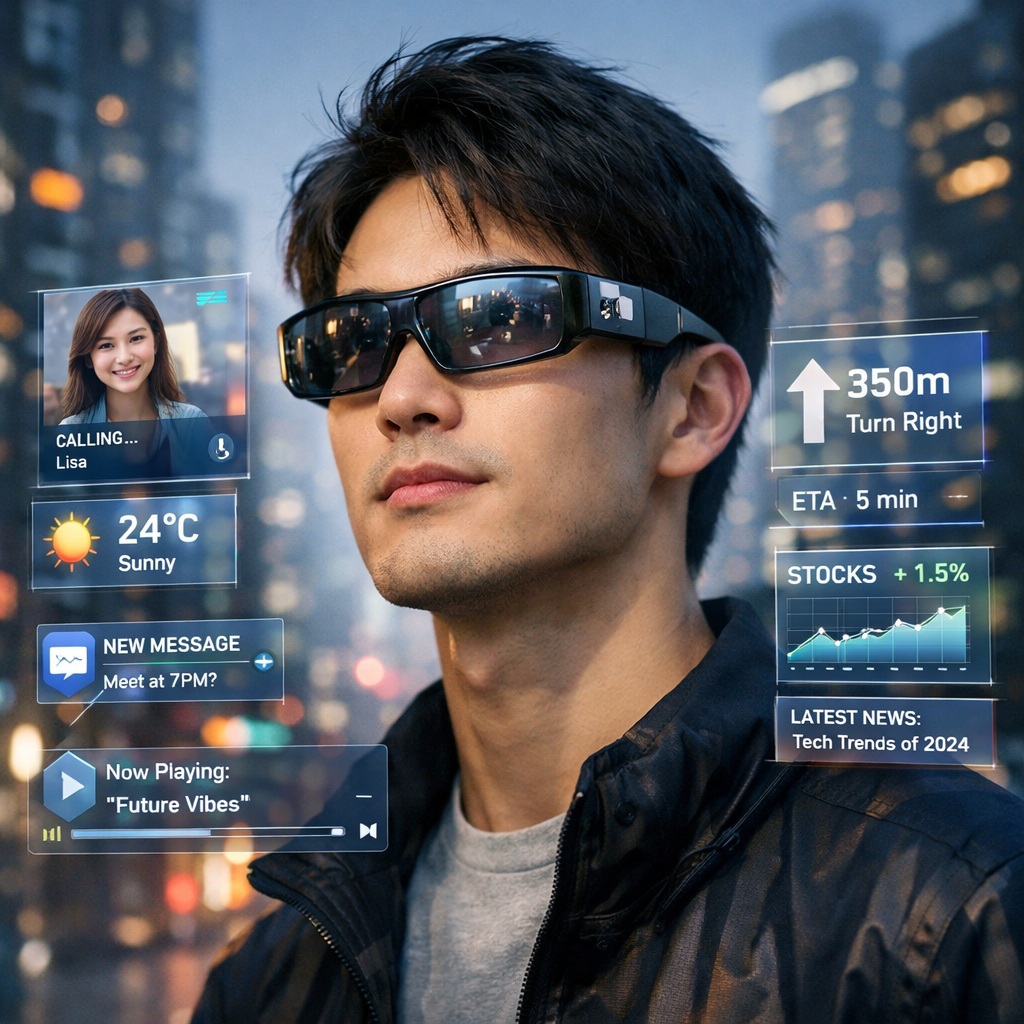
Conclusion: I haven’t tried it yet, but I can already see the future
I feel like AI glasses will start as a “cool gadget.”
Then one day, you’ll suddenly say:
“Wait… how did I live without this?”
I haven’t fully experienced it yet,
but the future I imagine is this:
It doesn’t just add effects to reality…
it smooths out the way I live inside reality.
And when that happens…
we’ll literally wear the future.